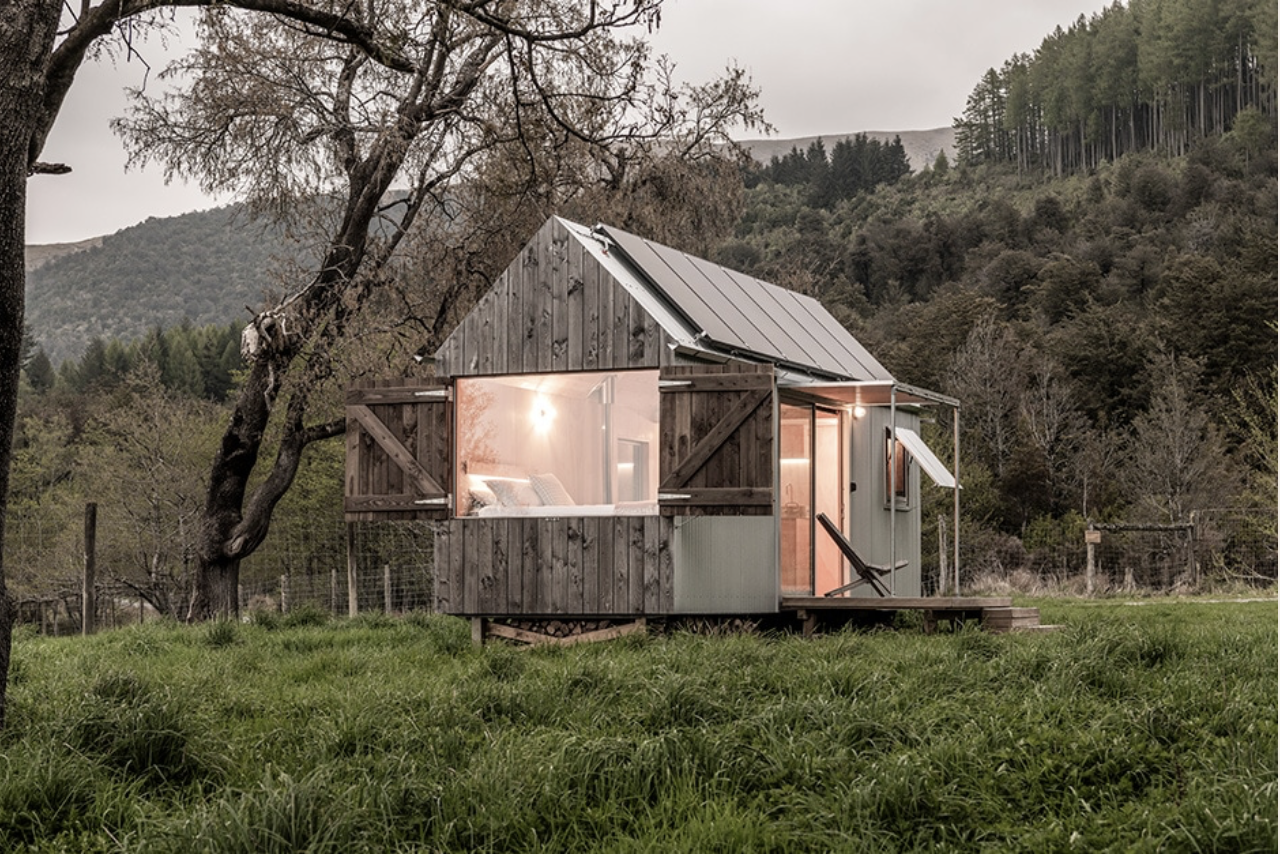

Why a Granny Flat?
Early in 2024, the Victorian State Government made it easier to build Granny Flats by loosening the rules. They waived the need for a planning permit if the proposed granny flat meets certain standards. Not requiring a planning permit saves a lot of time and cost, which was enough incentive for me to jump aboard and try building a granny flat myself.
For us, it made a lot of sense. We had a large, unused area in the backyard with excellent laneway access, so whoever lives in the Granny Flat would have their own driveway. Sewage and wastewater were close at hand, making it easy to plumb to services. Plus, it’s a good investment!
Crunching the Numbers
I did some basic math before starting. A 1-bedroom unit in my area can fetch about $300-$350 per week, around $15,000 per year after all the various costs. If I can keep the build cost of the granny flat to $60,000, it would provide a fairly safe 25% return on investment. Along with this excellent yield, the flat would also bump the value of my property by at least $60,000, as any new owners could benefit from this yield too. The math made sense, and it looked like a tidy passive income. Plus, I’d get to learn the ins and outs of building a home.
Keeping Costs Down
Of course, this only makes financial sense if I can keep the cost of the granny flat down, which is why I chose the owner builder route. As an owner builder, I’m responsible for organising all the trades (builder, plumber, electrician, and excavation), ensuring the building is correctly permitted, and doing some of the work myself. This approach saves a lot of money because labor costs in Australia far outweigh material costs. I also think it’s important to stay involved in projects like this and not just rely on others to do everything. Especially, given all the horror stories of failed building projects in recent years.
Becoming an Owner Builder
Becoming an Owner Builder is pretty easy. The name is actually a little misleading. It doesn’t have much to do with the physical act of building anything. It’s a certification that shows you know enough about the rules, regulations, and safety requirements in the Victorian construction industry. A lawyer, who has never held a hammer, would find the Owner Builder application process easier than an experienced DIYer.
The Process
The process is clearly documented on the VBA website, but here are a few extra tips:
- Online Test: The online test is really long, and if you get any question wrong, you need to wait 24 hours to retake the question. It took me about 5 days duration to finish.
- White Card: You’ll need a Construction Induction Card, or White Card, which is taught at most TAFEs in a one-day class. You need the physical card to complete the Owner Builder application, so I recommend doing the White Card course as soon as possible as it can take a week to be posted out.
- Application: Once you have the White Card, an assessment number to show you’ve completed the Owner Builder test, and have paid a fee, you can submit an application to be an Owner Builder. This was taking up to 50 days to review, but for me, it only took 7 days. They also asked for my building plans and I’m not sure why it was so quick for me.
You need all this done (White Card, Owner Builder approval, Building Plans) before you can be issued with a building permit. Without the building permit, you can’t begin any work, so start as many of the above steps as you can early, and in parallel.
Tiny House, Prefab Home, or Granny Flat?
I had three choices of what to build on the site:
- Tiny House on Wheels: These are popular because they’re transportable and don’t require a building permit. However, they have two big disadvantages: they can only be 2.4m wide, which is too narrow for serious long-term rental. Also, they’re treated as caravans, so they can’t be lived in for more than 28 days without a permit. Plus, they’re expensive. A proper Tiny Home costs well over $100,000, with the trailer alone costing $15,000.
- Prefab Unit: This seemed like a good compromise but ended up being too expensive. The cheapest unit I found was $140,000, plus another $10,000 for laying the foundations and connecting to services. The financial viability is significantly diminished at this sort of price.
- A self built Granny Flat: The only viable option for my circumstances. I followed a fairly traditional build sequence to get this done, and this is covered in the next section.
Steps to Building a Granny Flat
- Get a soil test to determine any potential issues with the foundations.
- Start the Owner Building application.
- Get a White Card.
- Employ a designer to prepare drawings for the building, determine energy rating and accessibility requirements, and make a building permit submission.
- Use the designs to start getting quotes from a builder, electrician, and plumber.
- Obtain a building permit, which requires Owner Builder Certification.
- Begin work.
Progress Update
At the time of writing, I’m well into the build stage and forecasting the total cost to be around $60,000. I’ll write commentary on the process once I’m close to completion and include a few photos of the finished dwelling.
Stay tuned for more updates on this project!

